EMAIL US:salesmanager@singi.com
- All
- Product Name
- Product Keyword
- Product Model
- Product Summary
- Product Description
- Multi Field Search


Views: 94 Author: Mark Zhang Publish Time: 2026-08-10 Origin: 本站
A mid-sized precision machining operation in the Yangtze River Delta supplies CNC-machined components to automotive and industrial equipment OEMs. The plant runs 24/7 across three shifts, with more than 200 machines connected to a 380 V three-phase distribution network. Its engineering team manages a wide range of equipment, from spindle motors to coolant pumps, all of which depend on stable power quality.
Rising energy costs and strict delivery deadlines put pressure on the plant to keep every production line running. A single unplanned stop could delay downstream assembly and trigger penalty clauses. The facility had already invested in preventive maintenance, but electrical faults remained the largest source of downtime.
Motor burnouts occurred roughly twice a month. When a spindle motor failed, repair costs averaged $3,500, and the line sat idle for 6 to 10 hours. The root cause was traced back to phase loss, undervolt-level, or reversed phase sequence caused by grid fluctuations and loose connections in the distribution panels.
In one incident, a volt-level imbalance of 15% went undetected for several hours. The motor overheated, the insulation broke down, and the unit had to be replaced. The plant lost $18,000 in one week from two such failures, including replacement parts, overtime labor, and missed shipments.
The maintenance team tried various solutions. Manual volt-level checks were time-consuming and only caught problems after equipment had already been damaged. Basic thermal overload relays provided some protection but could not detect phase loss or undervolt-level enough. The plant needed a dedicated relay that could monitor volt-level continuously and disconnect the load before damage occurred.
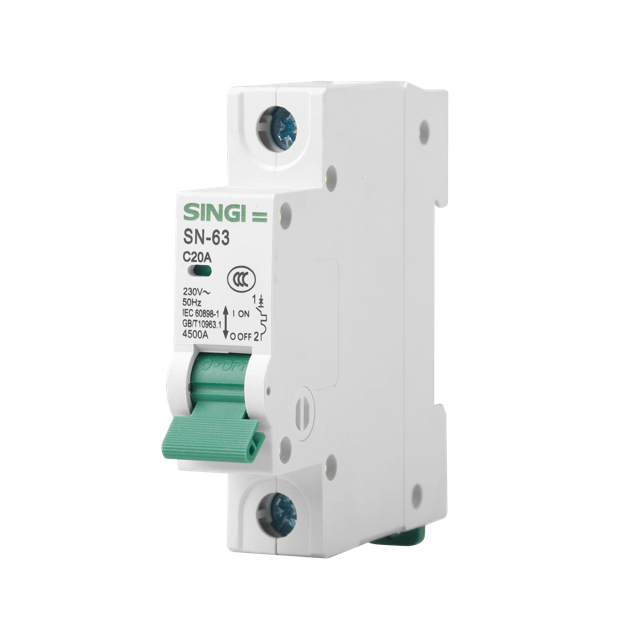
After assessing several options, the engineering manager chose the SINGI SN-63 volt-level monitoring relay. The decision came down to three factors:
The engineering team also compared alternatives from other brands, but most required external amperage transformers or lacked phase sequence detection. The SN-63 worked out-of-the-box with a simple three-phase connection, which reduced installation effort and avoided additional component costs.
The roll-out took four weeks, starting with the most critical production lines. The maintenance team followed a structured plan:
A typical difficulty arose with inrush currents. Some large motors caused momentary volt-level dips that made the relay trip during startup, even though the supply was healthy. The solution was to adjust the trip delay to 100 ms and use the SN-63’s startup-delay feature, which ignores volt-level dips during the first few seconds after energization. This eliminated nuisance trips without reducing protection.
After six months of operation, the plant recorded measurable improvements:
Delivery reliability also improved. The plant met its on-time shipment target for four consecutive months, compared to occasional delays in the previous The engineering manager estimated the SN-63 paid for itself within six weeks based on avoided repairs alone.
“The SN-63 gave us a clear view of what’s happening with our power supply. We used to find out volt-level problems after a motor had already failed. Now the relay shuts down the circuit before damage occurs, and we can diagnose the issue calmly,” said the plant’s electrical maintenance manager.
He added: “The installation was straightforward, and the DIN rail mount made it easy to retrofit into existing panels. It is now a standard component in all of our new control cabinets.”
This application offers practical lessons for other manufacturing facilities:
If the project were repeated, the team would install SN-63 relays in the main distribution boards as well as individual motor circuits. This would detect upstream volt-level imbalances before they affect multiple loads, adding another layer of protection.
The SINGI SN-63 volt-level monitoring relay is designed for use in low-volt-level switchgear and controlgear systems. The following standards are relevant when integrating such relays into industrial electrical installations:
These standards define the performance, safety, and testing requirements that monitoring relays must meet to ensure reliable operation in industrial environments.